
Engine Rebuild & Major Repairs in Louisville | Head Gasket & Replacement
Engine rebuild, head gasket replacement, compression testing, and major repair planning.
How We Diagnose Engine Problems
Before recommending major engine work, we confirm the root cause:
- Code Scan & Live Data: Codes, coolant temp, fuel trims, knock sensors, O2 sensors, and misfire counts.
- Compression Test: Cylinder pressure to identify rings, valves, or head gasket failure.
- Leak-Down Test: Air-loss testing through intake, exhaust, crankcase, or cooling system.
- Borescope Inspection: Camera inspection of cylinder walls, pistons, and valves.
- Coolant System Test: Pressure test and combustion-gas check.
- Oil Analysis: Metal-particle testing when internal wear is suspected.
- Diagnostic Report: Written findings, photos/video when available, repair options, and a firm quote.
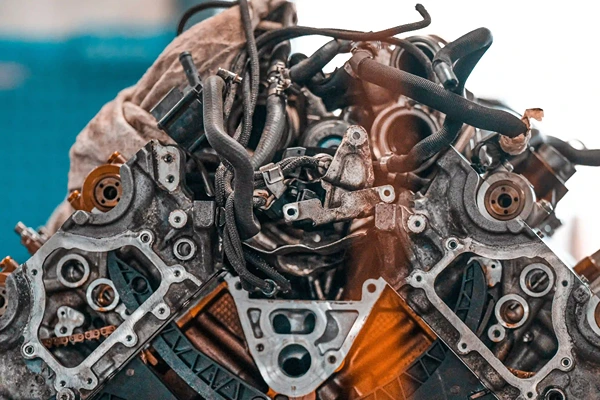
Symptoms We Diagnose
| Symptom | Possible Cause |
|---|---|
| Check engine light on | Dozens of possibilities: needs diagnostic |
| Engine knocking / ticking | Low oil pressure, rod knock, lifter failure, exhaust leak |
| Loss of power | Clogged catalytic converter, fuel delivery issue, timing problem |
| Rough idle / misfire | Ignition issue, fuel injector, vacuum leak, valve issue |
| Engine overheating | Head gasket failure, thermostat, water pump, cooling fan |
| Excessive smoke | Coolant burning, oil burning, overfueling, injector issue, turbo issue |
| Poor fuel economy | Sensor issue, misfire, dragging brakes, transmission issue |
| Oil consumption | Worn rings, valve seals, PCV system blockage |
Head Gasket Repair & Replacement
A blown head gasket can affect gas or diesel engines. We verify failure before teardown.
How to tell if your head gasket is blown
Common signs: overheating, white smoke, milky oil, bubbles in the coolant reservoir, coolant loss with no visible leak, and misfire codes on adjacent cylinders.
Our approach
We confirm failure with chemical and/or leak-down testing, inspect the cylinder head for warping or cracks, machine the surface if needed, and install OEM-quality gaskets using factory torque procedures. While the engine is apart, we recommend related components when appropriate: timing belt/chain, water pump, thermostat, and hoses.
Engine Rebuild Services
An engine rebuild makes sense when internal wear exists but the block and major components are still usable.
When rebuild makes sense
Choose rebuild when the vehicle has high value, replacement is unavailable or too expensive, damage is limited to internal wear, and you plan to keep the vehicle.
What a rebuild includes
Complete disassembly, cleaning, inspection, cylinder honing or boring, new pistons, rings, bearings, seals, valve work, timing components, oil pump, water pump, full gasket set, reassembly, and break-in.
What a rebuild does NOT include
A rebuild does not automatically include a cracked cylinder head, turbocharger replacement, alternator, starter, or AC compressor. These are assessed and quoted separately.
Engine Replacement
Engine replacement is often better when the block is cracked, rebuild cost exceeds vehicle value, fast turnaround matters, or a low-mileage used engine is available.
Engine replacement options
| Type | Pros | Cons |
|---|---|---|
| New OEM engine | Full warranty, zero miles, factory spec | Most expensive option |
| Remanufactured engine | Professionally rebuilt, warranty, tested | Moderate wait time |
| Used / low-mileage engine | Most affordable, available quickly | Limited warranty, unknown history |
What we do during replacement
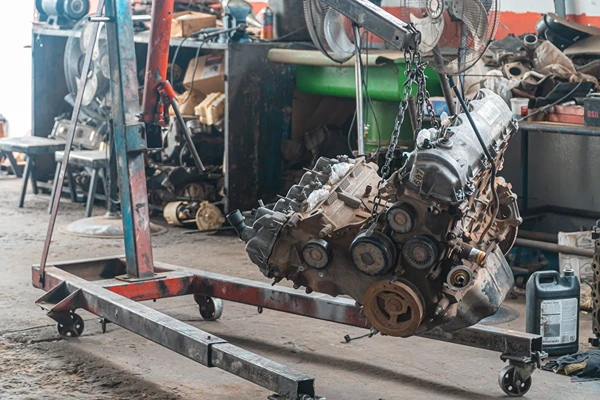
We remove the old engine, transfer accessories, replace gaskets and seals including the rear main seal, install new oil/coolant/filter, and verify operation before delivery.
Timing Chain & Belt Service
Timing chain or belt failure can destroy an engine. Rattling from the front of the engine or overdue belt service needs inspection.
Signs of timing chain failure
Watch for cold-start rattling, timing correlation codes (P0016, P0017, P0008), rough running, misfires, no-start, or catastrophic failure.
Recommended intervals
- Timing belt: Every 60,000-100,000 miles depending on manufacturer
- Timing chain: No set interval, but inspect at 100,000+ miles if noisy
Frequently Asked Questions
How do I know if I need a rebuild vs a replacement?
We determine that during diagnostic. Rebuild usually fits a good block and long-term ownership; replacement fits block damage, severe wear, or faster turnaround needs.
How long does an engine rebuild take?
Most rebuilds take 1-3 weeks depending on parts and machine shop workload. We give a timeline after inspecting your engine.
Is head gasket replacement worth it on a high-mileage engine?
It depends on overall engine condition. If there is oil burning, low compression, or 200,000+ miles with other issues, a head gasket alone may not solve everything. If the engine is healthy, it can be worth it.
Do you warranty your engine work?
Contact us for warranty details on our engine work.
Can you diagnose engine problems without tearing the engine apart?
Yes. Compression testing, leak-down testing, borescope inspection, and live data analysis usually identify the failure without teardown. We disassemble only after approval.
Do you work on both gas and diesel engines?
Yes. We specialize in diesel, especially Cummins 6.7L, and also diagnose and repair gas engines. See our domestic & import page for make-specific coverage.